FARARANO Project Marks the End of a Year of Sustainable Impact
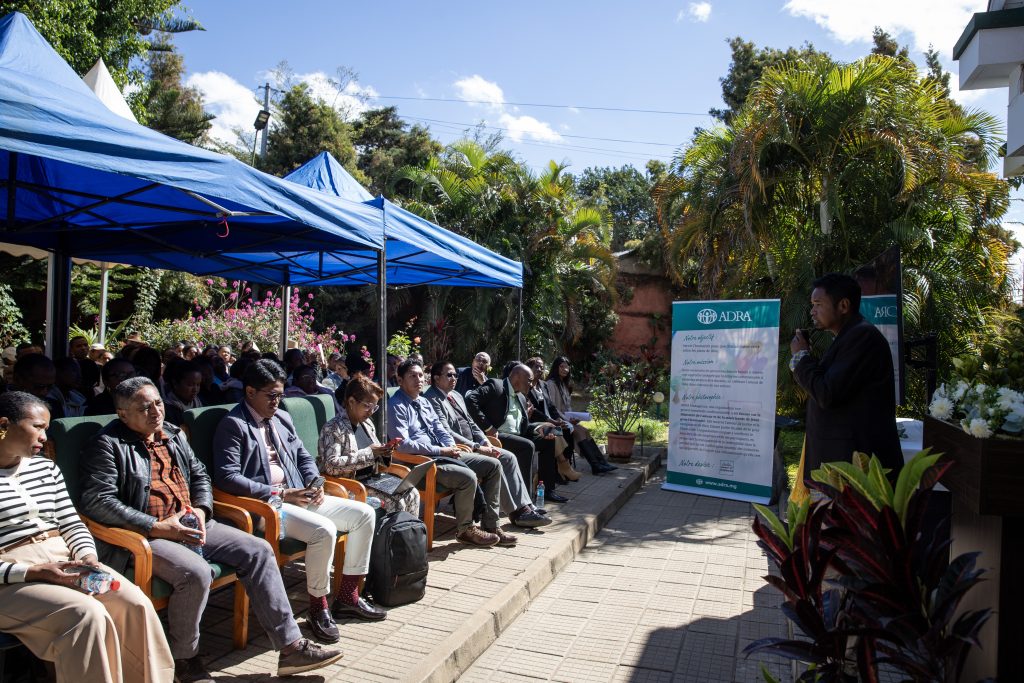
ADRA Madagascar officially marked the successful completion of the FARARANO Project during a closing ceremony attended by representatives of government ministries, local authorities, partners, community leaders, cooperatives, and beneficiary households from the rural commune of Alakamisy Fenoarivo, Antananarivo Atsimondrano District.
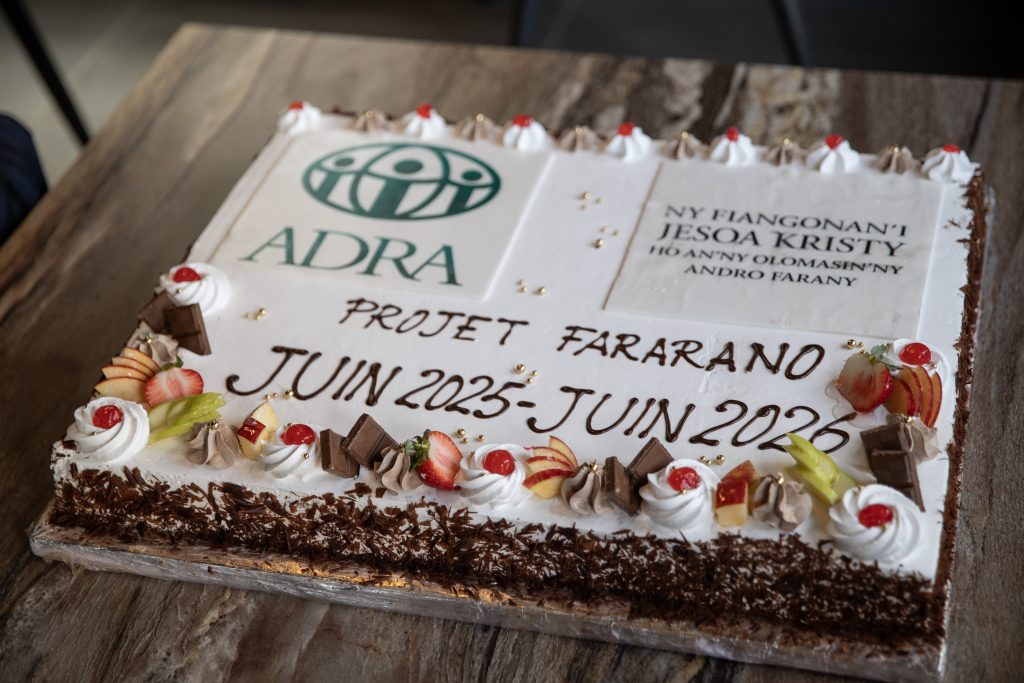
Implemented from June 2025 to June 2026, with the generous support of The Church of Jesus Christ of Latter-day Saints, the project aimed to strengthen food security and improve the livelihoods of vulnerable households through climate-smart agriculture, improved livestock farming, and enhanced market access.
At the heart of FARARANO was the belief that sustainable development begins with knowledge.
Through practical training in composting, conservation agriculture, organic farming, sack gardening, improved livestock production, business management, and marketing, farmers acquired the skills needed to increase productivity while protecting natural resources.
The ADRA’s Farmer Market School (FMS) approach also helped shift farmers’ mindsets from subsistence production to agribusiness. Farmers learned to analyze market demand, improve product quality, plan production according to customer needs, and negotiate better prices by working collectively through cooperatives.
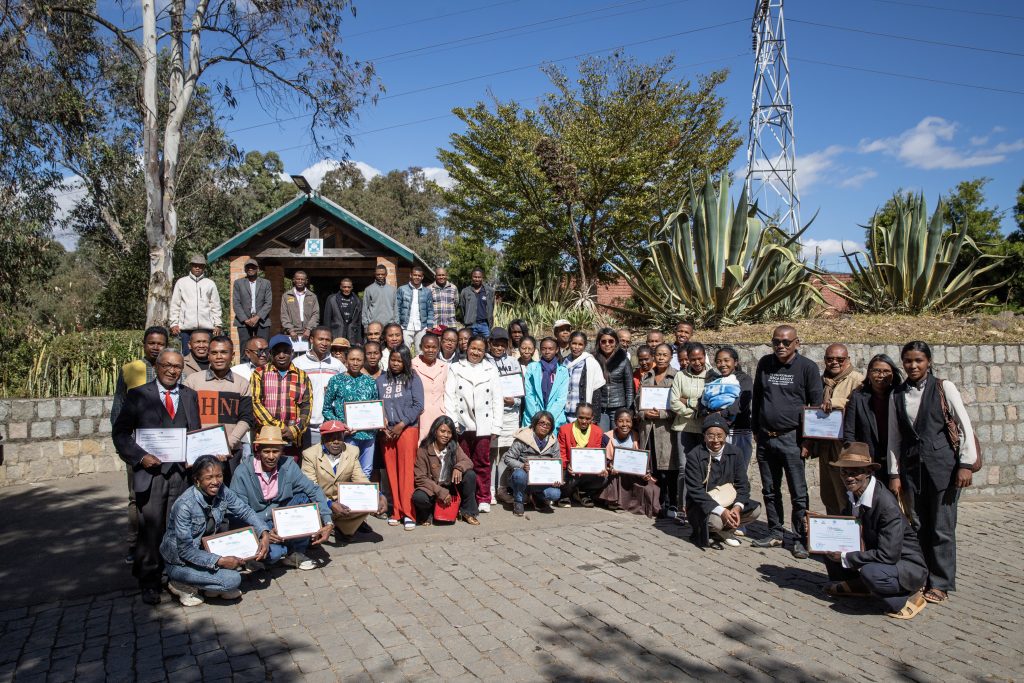
Representatives of FARARANO beneficiaries, symbolizing the communities that will continue the project's legacy long after its official completion.
In just twelve months, the FARARANO Project delivered significant and lasting results across the target communities.
A total of 1,992 households were trained in climate-smart agriculture and received agricultural inputs to improve productivity and resilience. Sixty Farmer Leaders were equipped to transfer knowledge and mentor fellow farmers, while six Farmer Market School (FMS) groups were established and formally registered as cooperatives.
The project also strengthened rural livelihoods through improved poultry production. 490 households received training in improved husbandry practices and poultry equipment, while 1,960 Kuroiler chickens were distributed to help families build sustainable income sources. To ensure continued technical support, six APPSA (Outreach Officer for Animal Production and Health agents) were trained and certified in animal health and production—the first such initiative in the district.
In addition, 23 Local Market Information System (LMIS) agents were trained in marketing and trade to connect producers with buyers and strengthen the market orientation of the newly established cooperatives.
The project’s impact extended well beyond its direct beneficiaries. 1,750 non-beneficiary households reported adopting the agricultural practices promoted by the project, while 98% of beneficiary households reported improvements in their income and overall quality of life.
As many beneficiaries expressed during the closing ceremony, "The project may have ended, but the seeds it planted will continue to bear fruit for years to come."
“One of ADRA’s core principles is to implement projects in a way that leaves a lasting and sustainable impact. Our goal is that, when we return years later, people will still be able to say, ‘Five years ago, this is what ADRA did, and this is how we have continued to grow and progress because of it,” said Dr. Chidi Nweneka, Acting Country Director of ADRA Madagascar.
ADRA Madagascar extends its heartfelt gratitude to God, The Church of Jesus Christ of Latter-day Saints, government institutions, local authorities, implementing partners, and, above all, the farming communities whose dedication, resilience, and willingness to learn made FARARANO a remarkable success.
One year. Hundreds of transformed lives. Countless seeds of hope. Discover the story of the FARARANO Project and how communities are building a more resilient future through sustainable agriculture: