
When Farmers Become Entrepreneurs
How a Group of Smallholders Built a Cooperative Through the Farmers Market School Approach
For years, the farmers of Ambohitsarajary produced crops without knowing where to sell them or what price they should receive. Their harvests were often sold at a loss to middlemen, and despite their hard work, household incomes remained low.
“We used to grow crops and sell them at whatever price was offered. We didn’t know the market or the true value of our products,” recalls one cooperative member.
The arrival of the FARARANO Project and the FMS approach profoundly changed this reality. Through FMS, producers learned to analyze market demand before planting, identify periods of high demand, understand customer requirements, and negotiate better prices.
They discovered that profitable agriculture is not simply about producing more, it is about producing what the market demands, at the right time and with the quality consumers are looking for.
“Today, we know the value of our products, and no one can deceive us anymore,” says one farmer proudly.
This new mindset transformed the way they work.
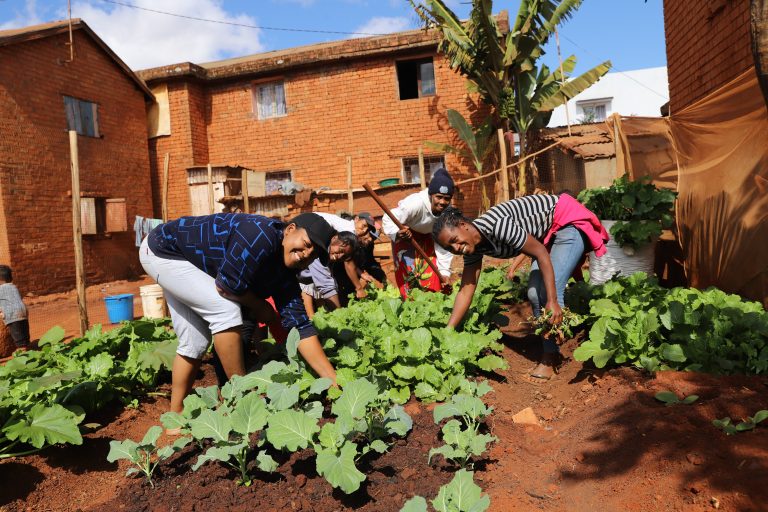
The farmers established a demonstration plot that serves both as a learning space and a showcase for their products. The site quickly attracted potential buyers and sparked the interest of other producers in the community.
What began as a small group of just eight people gradually evolved into a genuine community movement.
Inspired by the group’s results and the success of the demonstration plot, other community members joined the initiative. Today, the Ambohitsarajary cooperative has thirty members, men and women united by a common vision: to turn agriculture into a thriving business.
Through FMS, producers also recognized the importance of working together. As the cooperative now regularly supplies vegetables to several local institutions, members receive weekly orders and organize their production according to the needs of their customers.
The changes are visible within households. The impact goes far beyond increased income. Families now consume the vegetables they produce, improving both their diets and their nutritional well-being.
“Our household expenses have decreased, and our income has increased. We eat better, and our children are healthier,” shares one of the farmers.
The FMS approach has also enabled producers to develop new skills in financial management, production planning, quality standards, market development, and collective bargaining.
Building on these achievements, the members decided to formalize their organization by creating a legally recognized cooperative society, opening the door to larger markets and new economic opportunities.
What makes their story even more remarkable, however, is their spirit of solidarity. A portion of their harvest is regularly donated to a center caring for orphaned children. For them, agriculture is not only a source of income, it is also a way to serve their community.
For the farmers of Ambohitsarajary, the Farmers Market School has been far more than a training program. It has changed their way of thinking and empowered them to become agricultural entrepreneurs capable of producing, marketing, and prospering together.
“We no longer farm blindly. We farm with a vision, a market, and a future.”