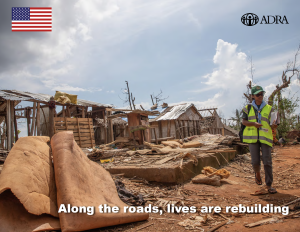
When Cyclone Gezani struck Madagascar’s eastern coast in February 2026, it left thousands of families facing devastating losses. Homes were destroyed, household belongings swept away, and access to basic services was severely disrupted. Entire communities found themselves isolated as roads became impassable and infrastructure was damaged.
In the face of this humanitarian emergency, ADRA Madagascar responded rapidly through the VONONA Project, funded by the United States Government with a total budget of US$1,549,322. More than an emergency response, VONONA demonstrated the importance of preparedness, strong partnerships, and community resilience in saving lives and restoring hope.
When disaster strikes, preparedness becomes the difference between waiting and acting.
Before Cyclone Gezani made landfall, the VONONA project had already strengthened ADRA Madagascar’s emergency response capacity by training Emergency Response Teams (ERT), pre-positioning relief supplies, and reinforcing coordination with local authorities and humanitarian partners. As a result, teams were able to mobilize immediately after the cyclone, delivering life-saving assistance without delay.
The first priority was to understand the scale of the disaster.
ADRA teams conducted rapid household assessments across affected communities, working closely with local authorities and community leaders to identify the most vulnerable families. Each assessment ensured that humanitarian assistance would reach those who needed it most.
However, reaching these communities was often a challenge in itself.
Roads were blocked by fallen trees, debris, and flood damage. Rather than waiting for access to be restored, ADRA staff joined local residents in clearing roads by hand, reopening critical routes that allowed relief convoys to continue their journey.
Where land access was impossible, the teams adapted. Relief supplies were transported by boat to isolated communities cut off by floodwaters, ensuring that distance never became a barrier to humanitarian assistance.
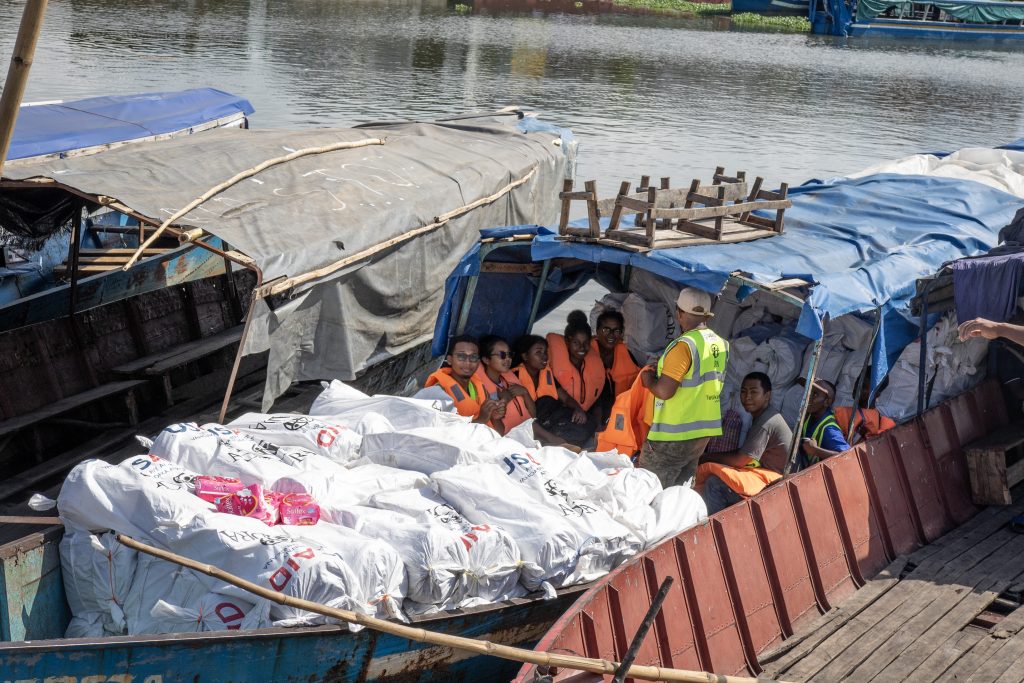
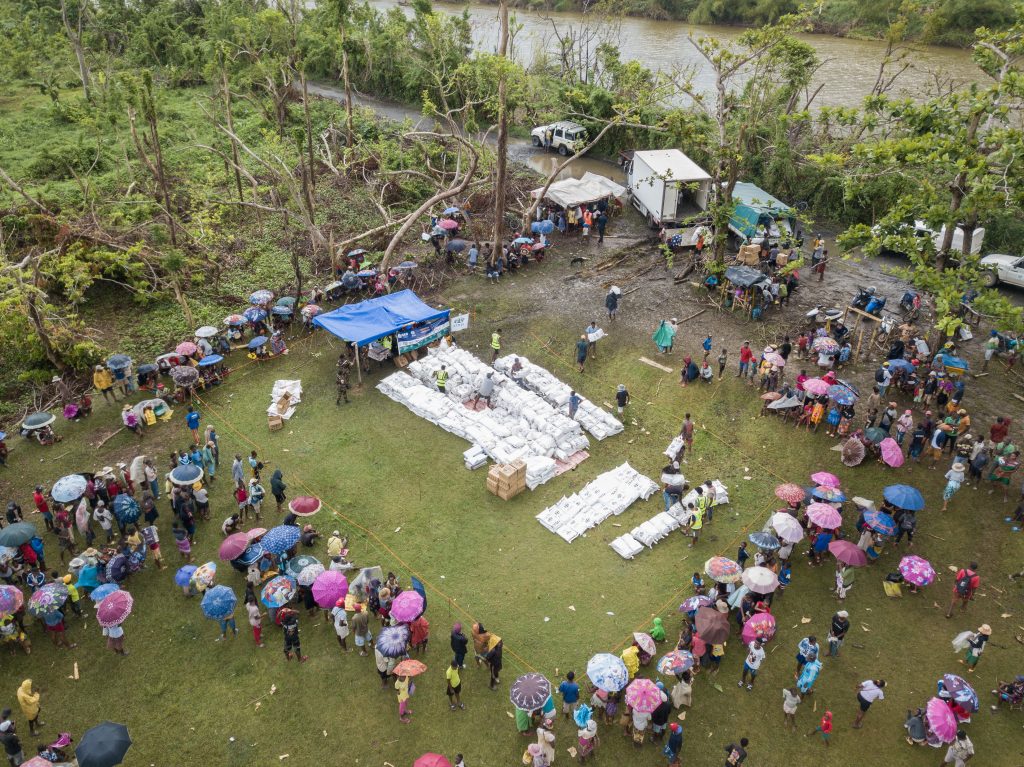
Through VONONA, ADRA Madagascar delivered life-saving humanitarian assistance to 15,994 households, representing 63,377 people, across 44 fokontany affected by Cyclone Gezani.
In Toamasina II District (Atsinanana Region), the project reached 15,329 households across six communes, including 9,197 female-headed households and 6,132 male-headed households.
In Ambatondrazaka District (Alaotra Mangoro Region), 665 households in one commune also received assistance, including 399 female-headed households and 266 male-headed households.
Overall, the project achieved 99.9% of its target, reaching 15,994 of the 16,000 households initially planned.
Families received essential humanitarian assistance designed to help them recover quickly and safely, including:
– 11,381 shelter kits to repair damaged homes.
– 15,994 kitchen kits to restore safe food preparation.
– Hygiene promotion activities that reached 16,576 households, helping reduce the risk of waterborne diseases and other public health threats.
The impact was immediate.
Within 48 hours of receiving shelter materials, 65% of assisted households had already repaired their homes, allowing families to regain a safe place to live while beginning the longer process of recovery.
The quality of the response was also reflected in community feedback, with 85% overall beneficiary satisfaction, highlighting the effectiveness, relevance, and timeliness of the assistance provided.
The VONONA response was made possible through the generous support of the United States Government and the close collaboration between humanitarian actors, government authorities, and local communities.
During a field visit to Toamasina, representatives of the U.S. Government witnessed firsthand the resilience of affected families and the tangible impact of humanitarian assistance.
As climate shocks become more frequent and intense, preparedness, partnership, and community engagement remain at the heart of ADRA Madagascar’s humanitarian mission.
Because every family deserves hope.
Because every community deserves to recover.
And because we will continue going as far as we can, to do as much as we can.
Discover the story behind this response through our photo essay, capturing the determination, solidarity, and resilience that defined ADRA Madagascar’s emergency operations following Cyclone Gezani: