
Towards Profitable Poultry Farming
With perseverance comes success: Norbert's Journey
At 29 years old, ANDRIAMANITRINIALA Norbert is a young father living in Ambohibary, Antanety II Fokontany, in the Commune of Alakamisy Fenoarivo.
Married and the father of two children, he has always practiced farming and livestock rearing, like most families in his rural community. Yet for many years, poultry keeping was little more than a supplementary activity.
“Poultry raising was just a pastime. It only helped us during emergencies, but it was never enough to support our family,” he recalls.
Like many small-scale farmers, Norbert lacked technical knowledge. Chickens roamed freely, there were no feeders or drinkers, and proper poultry management practices were virtually nonexistent. As a result, income from the activity remained low and irregular.
Everything changed with the arrival of the FARARANO Project.
After being selected as a beneficiary, Norbert participated in several days of training on improved poultry production. He learned best practices in poultry house management, feeding, animal health care, chick management, and techniques to improve productivity.
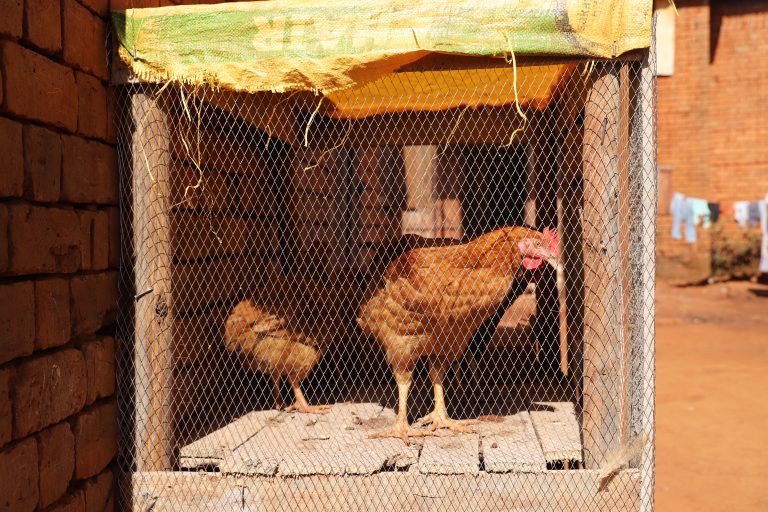
Upon completing the training, he received Kuroiler chickens, along with feeders and drinkers.
It was the first time he had ever raised this improved breed. He quickly noticed the difference compared to local chickens.
“They grow faster and have much greater production potential,” he explains.
Thanks to improved husbandry practices, within just four months, Norbert expanded his flock from only two local hens to nearly forty-five birds through the reproduction of his local chickens and the addition of the Kuroilers provided by the project. Today, he no longer sees poultry farming as a simple pastime but as a genuine income-generating activity capable of supporting his family’s needs.
Before the project, his earnings from poultry rarely exceeded 50,000 to 70,000 Ariary, depending on the number of chickens sold. Today, he views his poultry enterprise as a real investment in his family’s future.
For Norbert, this growth represents far more than an increase in the number of birds.
“It can improve our living conditions at home: paying our children’s school fees, covering daily expenses, and buying essential household items. It is already helping us.”
Together with his family, he has set an ambitious goal: to raise 100 chickens by the end of the year.
This transformation has also been made possible through the regular support of APPSA agents, who monitor poultry activities, advise beneficiaries, and ensure the health and well-being of the animals.
Today, Norbert looks to the future with optimism. Even after the project ends, he is determined to continue and expand his poultry enterprise.
“Life goes on, and the good things we have learned must be maintained and carried forward.”
His message to other poultry farmers is simple yet powerful:
“Take good care of what has been entrusted to you. It is not easy, and it requires patience. But with perseverance, you will always succeed.”