
A Field of Blessings
Samuel's Journey from Traditional Farming to Prosperity
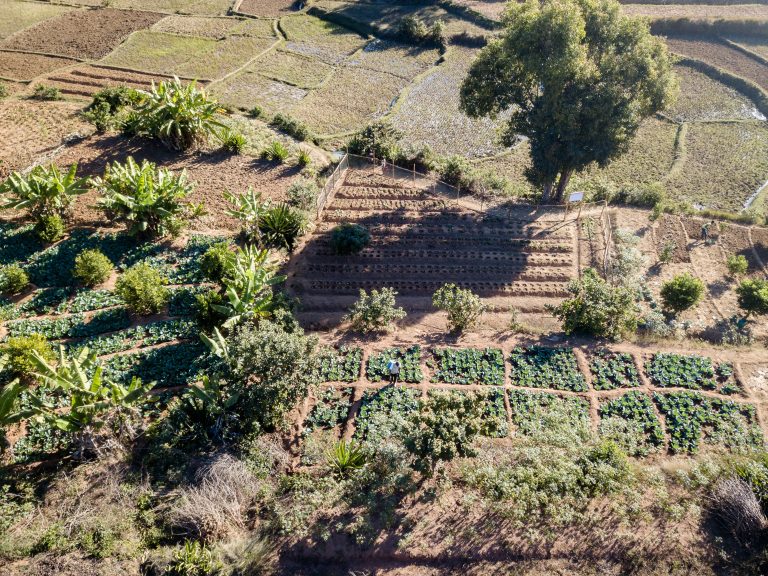
In Manohiadanana, the lush green fields of RAJOELISON Samuel bear witness to a remarkable transformation. At 50 years old, this father of four is a farmer by heritage, having spent his entire life cultivating the land and raising livestock, carrying on knowledge passed down from generation to generation.
Yet, despite his experience, he faced challenges familiar to many smallholder farmers: limited access to improved techniques, low production capacity, and difficulties accessing markets.
“If we were on the first step of the staircase before, today we have reached the second,” he says with a smile.
The arrival of the FARARANO Project marked a turning point in his life. Through training provided under the project, Samuel discovered new agricultural techniques, including compost making, organic farming, mulching, and sack gardening.
“We learned to move away from chemical fertilizers and produce in a more natural way. Even with just one sack in front of your house, a family can grow its own vegetables.”
Beyond knowledge, the project provided him with vegetable, bean, maize, and pea seeds, as well as agricultural tools that enabled him to expand his farming activities.
The results quickly exceeded his expectations.
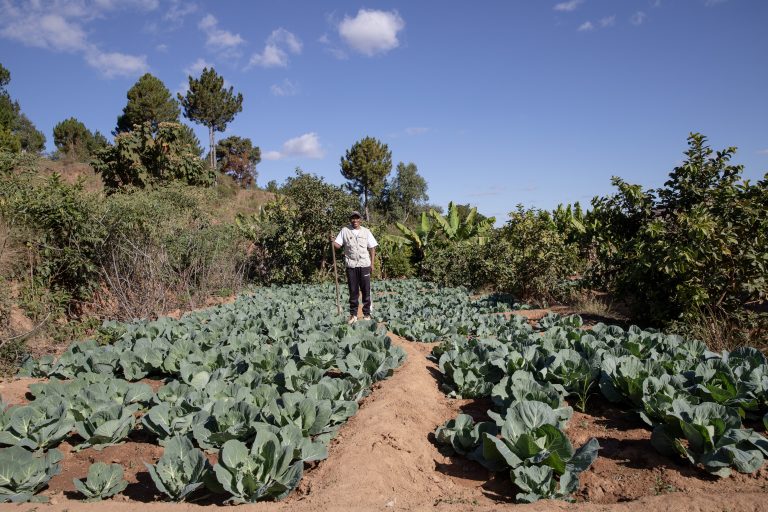
In the year before the project, Samuel produced between 3,000 and 4,000 heads of cabbage. Following the support of the FARARANO Project, his production increased to 7,000 heads of cabbage, almost double his previous output.
This increase in production immediately translated into higher income.
“We sold 1,000 heads of cabbage for two million Ariary. It is clear that cabbage production is profitable.”
But for Samuel, the greatest change goes beyond increased production. Through the FMS approach, he realized that producing crops is not enough; farmers must also know how to market their products. Before the project, intermediaries captured a significant share of the value of their produce. Today, thanks to the strengthening of the cooperative and the development of market linkages, producers are connecting directly with buyers.
“Now there are no intermediaries. The products go directly to the consumers.”
This new market perspective has given him the confidence to invest further in his farm and to look to the future with ambition. His dream is to continue increasing production, improve his equipment, and share his knowledge with other farmers in his community.
“I want all the farmers around me to benefit from what we have learned.”
For him, this success has a very special name:
“Saha fitahiana” – A Field of Blessings.
Because beyond abundant harvests and additional income, the project has sown something even more lasting: knowledge, hope, and the conviction that with the right techniques and better market access, a smallholder farmer can transform his farm into a genuine source of prosperity.
And his message to other producers is simple:
“Put into practice what you have learned. You will see the results, and you will achieve success.”